





Planning an outdoor renovation often involves choosing the right combination of natural and built features. While many homeowners use the terms interchangeably, understanding hardscape vs. landscape is essential for creating a balanced, functional, and visually appealing yard. Both elements play important roles in outdoor design, and knowing how they work together can help you make better decisions for your property.
Whether you are building a new patio, planting trees, or redesigning your entire yard, understanding the differences between hardscaping and landscaping is the first step toward creating an outdoor space that meets your needs and complements your home.
What Is Hardscaping?
Hardscaping refers to the non-living, constructed elements of a landscape. These permanent features provide structure, improve accessibility, and create functional outdoor living spaces.
Common hardscape features include:
- Patios
- Walkways
- Driveways
- Retaining walls
- Fire pits
- Outdoor kitchens
- Pergolas
- Stone steps
- Paver pathways
- Decorative walls
Hardscape materials often include concrete, natural stone, brick, pavers, gravel, and wood. These durable materials are designed to withstand changing weather conditions while requiring relatively little maintenance.
What Is Landscaping?
Landscaping includes the living elements that bring color, texture, and natural beauty to an outdoor space. These features grow and change over time, requiring regular care to remain healthy and attractive.
Typical landscaping elements include:
- Lawns
- Trees
- Shrubs
- Flowers
- Ground cover plants
- Garden beds
- Ornamental grasses
- Mulch
- Native plants
Landscaping softens the appearance of hardscape features while creating a welcoming and vibrant environment.
Hardscape vs. Landscape: Key Differences
Although both contribute to the overall design of your yard, they serve different purposes.
| Feature | Hardscape | Landscape |
| Components | Non-living materials | Living plants and vegetation |
| Purpose | Structure and functionality | Beauty and environmental benefits |
| Maintenance | Generally low | Ongoing seasonal care |
| Lifespan | Long-lasting | Continues to grow and change |
| Examples | Patios, retaining walls, walkways | Trees, lawns, flowers, shrubs |
A successful outdoor design typically combines both elements to achieve balance, usability, and lasting appeal.
Benefits of Hardscaping
Hardscape features provide lasting improvements that increase the functionality and value of a property.
Some of the primary benefits include:
- Creates usable outdoor living spaces
- Improves accessibility
- Reduces soil erosion
- Enhances drainage when properly installed
- Requires less maintenance than lawns
- Increases property value
- Adds year-round visual interest
Features such as patios and walkways also encourage homeowners to spend more time enjoying their outdoor spaces.
Benefits of Landscaping
Landscaping contributes natural beauty while offering important environmental and lifestyle advantages.
Benefits include:
- Improves curb appeal
- Provides shade and cooling
- Supports pollinators and wildlife
- Enhances air quality
- Reduces stormwater runoff
- Creates privacy
- Adds seasonal color and texture
According to the United States Environmental Protection Agency, well-planned landscaping with appropriate plant selection can help improve water efficiency and support healthier ecosystems.
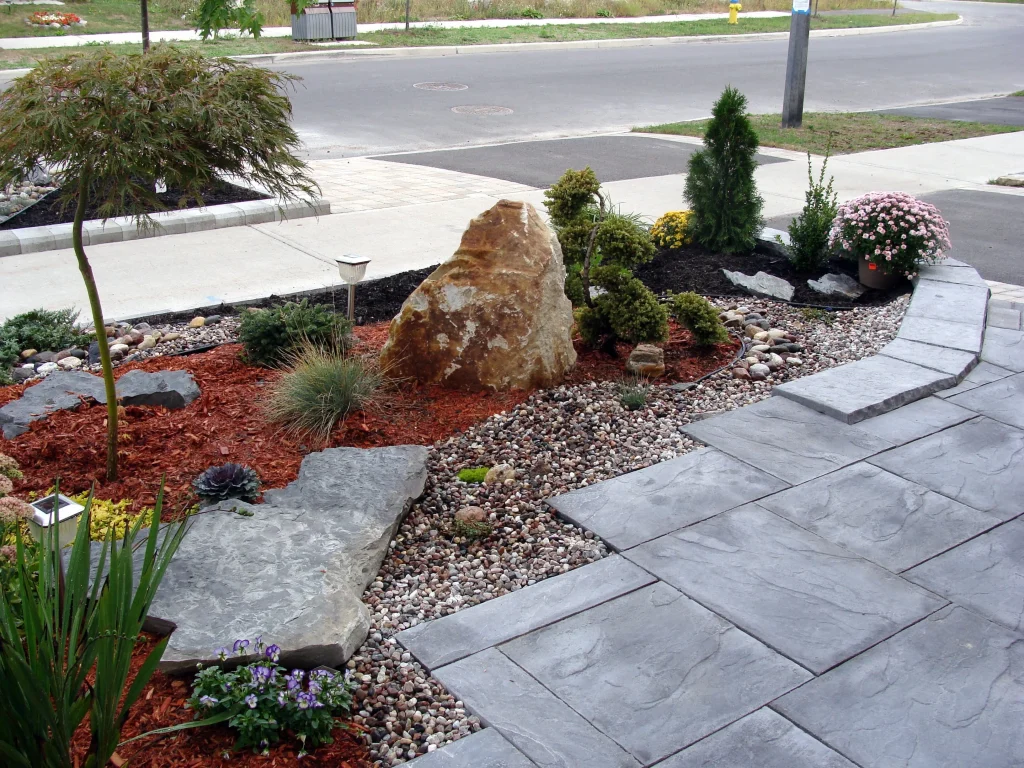
How Hardscaping and Landscaping Work Together
The most successful outdoor spaces combine hardscape and landscape features into one cohesive design. Hardscape provides the framework, while landscaping softens the overall appearance and adds natural beauty.
For example:
- A stone patio surrounded by flowering plants creates an inviting entertainment space.
- A retaining wall paired with ornamental shrubs adds both stability and visual appeal.
- Walkways lined with landscape lighting and garden beds improve safety while enhancing curb appeal.
- An outdoor kitchen surrounded by trees and decorative plants creates a comfortable gathering area.
Blending these elements allows homeowners to enjoy an outdoor space that is both functional and attractive.
Factors to Consider When Planning Your Project
When deciding how much hardscaping and landscaping your property needs, consider your lifestyle, maintenance preferences, and long-term goals.
Important factors include:
Property Layout
Sloped properties may require retaining walls, steps, or drainage improvements before landscaping can be installed.
Budget
Hardscape installations often require a larger upfront investment, while landscaping expenses may continue through ongoing maintenance.
Maintenance Requirements
If you prefer a lower-maintenance yard, incorporating more hardscape features and drought-tolerant plants may reduce the amount of regular upkeep.
Outdoor Activities
Think about how you plan to use your outdoor space. Entertaining guests, gardening, relaxing, or providing a play area for children may influence your design choices.
Climate
Choose plants and materials that perform well in your local weather conditions to improve durability and reduce maintenance.
Why Professional Design Makes a Difference
Creating the right balance between hardscape and landscape installation requires careful planning. Experienced landscape professionals evaluate your property’s layout, drainage, soil conditions, and lifestyle needs before developing a comprehensive design.
Professional planning helps ensure:
- Proper drainage
- Functional outdoor spaces
- Appropriate plant selection
- Durable hardscape installation
- Balanced visual design
- Long-term landscape performance
A thoughtful design minimizes future problems while maximizing the beauty and usability of your outdoor space.
Choosing the Right Balance
There is no universal formula for determining the ideal mix of hardscape and landscaping. Every property is unique, and the right balance depends on how you want your outdoor space to function.
Many homeowners benefit from combining:
- Spacious patios with surrounding garden beds
- Walkways connected by healthy lawns
- Retaining walls softened with shrubs and flowers
- Outdoor living spaces shaded by mature trees
- Decorative stone features complemented by native plants
A balanced approach creates an outdoor environment that remains attractive, practical, and enjoyable throughout every season.
Read also: Why Proper Landscape Planning Makes Every Project More Successful
Create the Perfect Balance for Your Outdoor Space
Combining hardscape and landscape elements is the key to building an outdoor space that is both functional and visually appealing. Thoughtful planning allows patios, walkways, retaining walls, plants, and lawns to work together, creating a landscape that enhances curb appeal, usability, and long-term property value. A balanced design ensures your outdoor environment remains beautiful, practical, and enjoyable throughout every season.
If you are ready to transform your property with a customized outdoor design, contact Alpine Aesthetic Landscapes for professional landscaping and hardscaping services. Their experienced team can help you create the ideal combination of natural and structural features tailored to your vision and lifestyle.